in a pickle card game instructions
In a Pickle Card Game: A Comprehensive Guide
In a Pickle is a fast-paced, engaging card game for two to six players, offering quick rounds and strategic discarding. It’s known for its simple rules and surprising twists, making it accessible to all ages.
What is “In a Pickle”?
In a Pickle is a delightfully chaotic card game centered around swiftly shedding cards by matching colors or numbers. It’s a game of quick thinking and a little bit of luck, designed for 2-6 players, making it perfect for family game nights or casual gatherings with friends. The core mechanic revolves around avoiding the dreaded “Pickle” card, which introduces a penalty.
Unlike complex strategy games, In a Pickle is remarkably easy to learn, yet offers enough strategic depth to keep players engaged. The game’s appeal lies in its unpredictable nature and the constant need to adapt to changing circumstances. It’s a fantastic option for those seeking a lighthearted and entertaining card game experience, offering a refreshing alternative to more demanding titles.
Game Overview & Objective
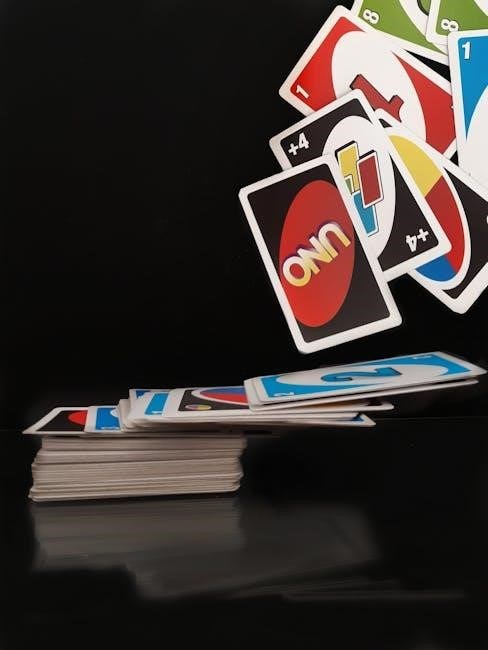
In a Pickle is played with a specialized deck of cards featuring three distinct types: Dill, Sweet, and Hot, each with numerical values. The primary objective of the game is to be the first player to empty your hand of all cards. Players achieve this by strategically playing cards that match either the color or number of the previously played card.

However, the game introduces a unique challenge – avoiding the “Pickle” card. When a player cannot legally play a card, they must draw from the draw pile. The game continues with players taking turns, attempting to discard their cards while skillfully maneuvering to avoid accumulating the penalty of holding the “Pickle” card. Quick reflexes and strategic thinking are key to victory!
Components of the Game
In a Pickle includes a dedicated deck of 64 cards, categorized into three flavorful types: Dill, Sweet, and Hot. Each card features a number ranging from 1 to 8, and a corresponding color – red, blue, green, or yellow. A crucial element is the single “Pickle” card, which introduces a penalty for the unfortunate player holding it at the end of a round.
The deck’s composition ensures a balanced mix of each card type and number, fostering strategic gameplay. The distinct card types aren’t just for theme; they trigger special actions when played, adding layers of complexity and excitement to each round. Understanding these components is fundamental to mastering the game.
Card Breakdown: Dill, Sweet, Hot
Dill cards generally force opponents to draw extra cards, disrupting their strategies and increasing their hand size. Sweet cards often allow the player to skip an opponent’s turn, providing a tactical advantage and controlling the game’s pace. Hot cards typically reverse the order of play, potentially benefiting the player or hindering opponents depending on the current situation.
These actions aren’t merely disruptive; they demand players adapt and anticipate their opponents’ moves. Mastering the timing of each card type is key to success. Each flavor introduces a unique element of control and chaos, making every game of In a Pickle dynamic and unpredictable.
Number of Cards & Deck Composition
A standard In a Pickle deck consists of 52 cards, mirroring a traditional playing card deck but with a flavorful twist. The deck is comprised of four suits – Dill, Sweet, Hot, and Pickle – each containing cards numbered 1 through 13. However, the Pickle cards aren’t numbered; they function as special action cards.
The distribution ensures a balance of strategic options. Players will encounter a mix of action and numbered cards, demanding adaptability. The relatively small deck size contributes to faster gameplay and increased card cycling, keeping players engaged and the game moving at a brisk pace.
Setting Up the Game
To begin In a Pickle, thoroughly shuffle the entire 52-card deck, ensuring a randomized distribution of Dill, Sweet, Hot, and Pickle cards. A designated dealer is chosen – this role rotates clockwise after each round. The dealer then distributes seven cards face down to each player, forming their initial hand.
The remaining cards form the draw pile, placed face down in the center of the playing area. Next to the draw pile, the dealer flips the top card to initiate the discard pile. This starting card dictates the initial suit or number that players must match or build upon during their turns, launching the gameplay.
Dealing the Cards
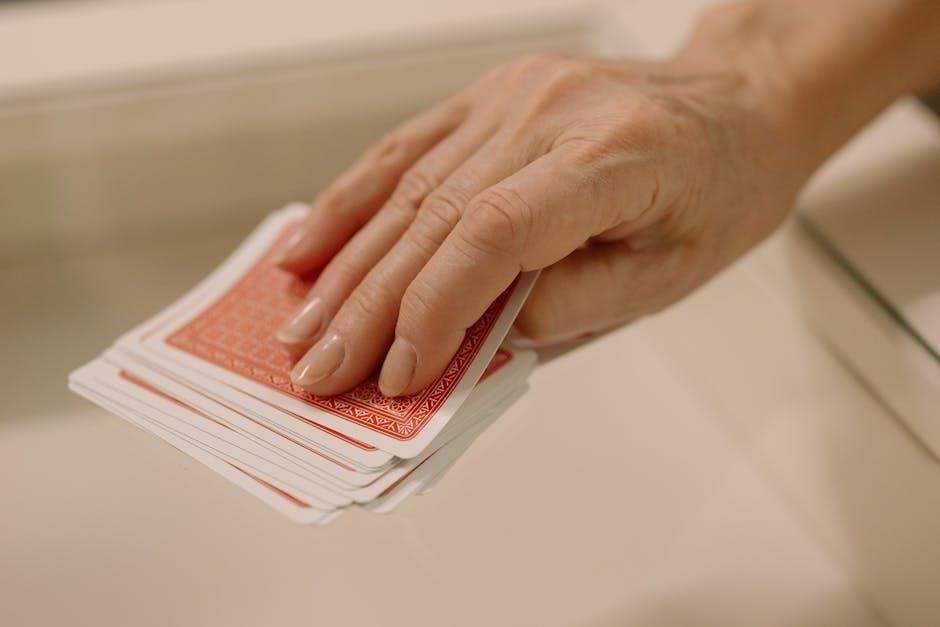
The dealing process in In a Pickle is straightforward. One player is chosen as the initial dealer, and this role rotates clockwise after each completed round. The dealer shuffles the entire deck of 52 cards meticulously to ensure randomness. Then, starting with the player to their left, the dealer distributes seven cards face down to each participant, one card at a time.
Players should keep their hands concealed from others. Any remaining cards after dealing form the draw pile, placed face down. Accuracy in dealing is crucial for fair play, ensuring everyone begins with an equal opportunity to strategize and win the game.
The Discard Pile & Draw Pile
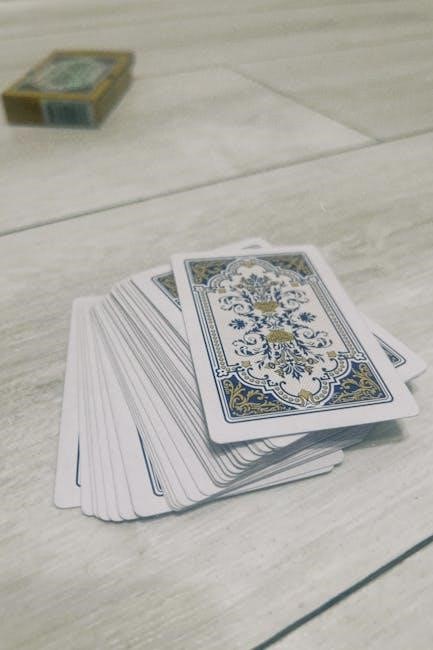
Two essential components of In a Pickle are the discard pile and the draw pile. After the cards are dealt, the remaining undealt cards are placed face down to create the draw pile – the source for replenishing hands. The discard pile begins empty and grows as players discard cards during their turns.
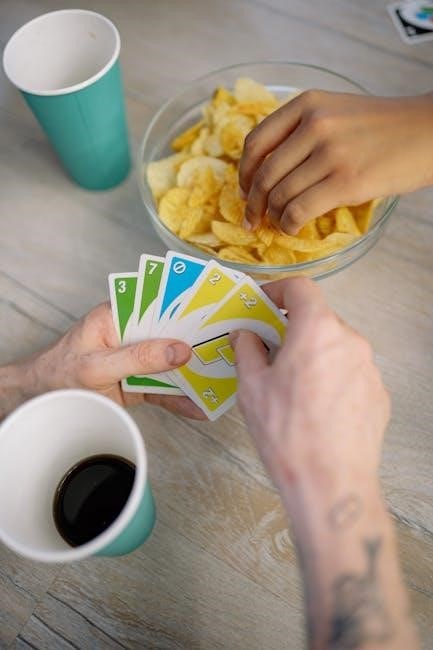
The top card of the draw pile is flipped over and placed beside it to start the discard pile. Players must legally play a card onto this pile, or draw a card from the draw pile if unable. The discard pile’s top card dictates legal plays, influencing strategic decisions throughout the game;
Gameplay: Basic Rules
In a Pickle gameplay revolves around matching cards to the top card of the discard pile, aiming to empty your hand first. On your turn, you must either play a card that matches the suit or the number of the top discard card, or draw a card from the draw pile. If you draw, you can immediately play it if it’s a legal match.
Play continues clockwise. Remember, special cards (Dill, Sweet, Hot) trigger unique actions, adding layers of strategy. The core objective is to strategically discard cards while avoiding being stuck with a hand full of unplayable cards as the “Pickle” card looms!
Playing a Card & Starting a Round
To begin a round, one player flips over the top card of the draw pile to initiate the discard pile. Play proceeds clockwise. On your turn, examine your hand and attempt to play a card matching either the number or the suit of the top card on the discard pile.
If a match exists, place your card on the discard pile and your turn ends. If you lack a playable card, you must draw one from the draw pile. You can immediately play the drawn card if it matches; otherwise, your turn concludes. Strategic card selection is key to efficiently reducing your hand size.
The “Pickle” Card & Its Significance
The “Pickle” card is central to the game’s dynamic. When a player discards a Pickle card, they immediately force the next player to draw two cards! This can significantly hinder an opponent’s progress, especially if they are nearing victory. However, playing a Pickle card also carries risk, as it can make you a target for retaliatory plays.
Clever timing is crucial. Using a Pickle card when an opponent has few cards left can be devastating. Conversely, playing it too early might not have the desired impact. Mastering the strategic deployment of the Pickle card is vital for success in In a Pickle.
Special Card Actions
Beyond basic play, certain cards trigger unique actions. Dill cards often allow a player to reverse the order of play, potentially disrupting an opponent’s carefully planned strategy. Sweet cards frequently grant the player an extra turn, providing a valuable opportunity to further deplete their hand. These special actions introduce an element of unpredictability and require players to adapt quickly.
Understanding these card-specific effects is key to mastering the game. Utilizing them at opportune moments can shift the momentum and create advantageous situations. Remember to pay close attention to the cards your opponents are playing to anticipate their potential special actions.
Dill Card Actions
When a Dill card is played, the direction of play immediately reverses. If play was proceeding clockwise, it now moves counter-clockwise, and vice-versa. This can be a powerful defensive maneuver, forcing an opponent to potentially play a card they didn’t intend to, or disrupting their strategy. Dill cards are particularly effective when an opponent is close to emptying their hand.
Strategic Dill card placement is crucial. Consider the current flow of play and the cards held by other players. A well-timed Dill can completely alter the game’s dynamic, giving you a significant advantage. Don’t waste it; use it to maximize disruption!
Sweet Card Actions
Playing a Sweet card forces the next player in sequence to draw two cards from the draw pile and skip their turn. This is a direct offensive action, hindering your opponent’s progress and increasing their hand size. Sweet cards are best used when an opponent has a small hand, maximizing the impact of the draw penalty.
However, be mindful! Opponents can stack Sweet cards. If they play a Sweet card in response, the next player must draw four cards and skip their turn, and so on. Strategic Sweet card play involves assessing the risk of a counter-attack and the potential reward of slowing down a leading player.
Advanced Gameplay & Strategies
Mastering “In a Pickle” involves more than just understanding the basic rules. Blocking opponents is crucial; anticipate their moves and use Dill or Hot cards defensively to disrupt their plans. Observe which cards players discard – this hints at their hand composition.
Card counting & probability become valuable skills. Tracking discarded cards helps estimate the likelihood of drawing specific cards you need. Prioritize discarding cards that opponents might benefit from. Don’t reveal your strategy! Vary your play to keep opponents guessing. Remember, a well-timed card can shift the game’s momentum dramatically.
Blocking Opponents
Effective blocking in “In a Pickle” centers around disrupting your opponents’ ability to get rid of cards. Utilize Dill cards strategically to force a change in direction, potentially hindering their progress. Hot cards are excellent for making opponents draw additional cards, slowing them down significantly.
Pay close attention to who is closest to emptying their hand. Focus your blocking efforts on them. Don’t waste valuable blocking cards on players who aren’t an immediate threat. Anticipate their likely plays and prepare a counter. Remember, a well-timed block can be the difference between winning and losing!
Card Counting & Probability
While “In a Pickle” relies on luck, tracking played cards enhances strategic decision-making. Note which card types – Dill, Sweet, or Hot – have been discarded. This helps estimate the remaining distribution within the draw pile. For example, fewer Hot cards suggest a lower probability of opponents being forced to draw.
Consider the number of cards remaining in opponents’ hands. A player with only a few cards is more likely to hold a “Pickle” card. Adjust your play accordingly, prioritizing blocking or discarding strategically. Understanding these probabilities, even roughly, provides a competitive edge.
Winning the Game
The primary goal in “In a Pickle” is to be the first player to empty your hand of all cards. Successfully discarding your final card declares you the winner of that round. However, games can sometimes stall if players repeatedly trigger special card actions, leading to prolonged exchanges.
If a stalemate occurs, a pre-agreed upon rule can be implemented. This might involve a limit on consecutive “Pickle” card plays, or a rule stating the player with the fewest cards after a set number of turns wins. Adaptability and clear communication regarding these scenarios are key to a fair and enjoyable game experience.
Reaching Zero Cards
Achieving zero cards signifies immediate victory in a standard round of “In a Pickle.” A player must legally discard their last card, adhering to the current play – either matching the card type (Dill, Sweet, or Hot) or playing a “Pickle” card.
Simply having zero cards isn’t enough; the discard must be valid. Announce “Pickle!” clearly upon discarding your final card to signal your win. Opponents should verify the legality of the play before acknowledging the victory. A false claim or illegal discard results in a penalty, typically drawing additional cards. Quick thinking and strategic discarding are crucial for reaching this winning state.
Dealing with Stalled Games
Sometimes, a game can reach a stalemate where no player can legally discard. This often happens when the draw pile is depleted, and players are stuck with unplayable cards. To resolve this, reshuffle the discard pile (excluding the top card) to create a new draw pile.
The top card of the original discard pile remains in play, establishing the new card type to match. If the stalemate persists after reshuffling, consider a house rule allowing players to discard any card, incurring a penalty like drawing extra cards. This prevents endless loops and keeps the game moving forward, ensuring a conclusion is reached;
Variations & House Rules
Team Play Variations introduce a cooperative element. Players pair up, combining their hands and strategizing together to deplete their cards first. Communication is key, but openly revealing card details might be restricted for added challenge.
Modified Card Actions allow for customized gameplay. For example, a Dill card could force a player to draw two cards instead of one, increasing the difficulty. Alternatively, Sweet cards could offer protection from the next Dill card played. These adjustments add replayability and cater to different player preferences, enhancing the overall enjoyment of In a Pickle.
Team Play Variations
Team Play transforms In a Pickle into a collaborative experience. Players form teams of two or more, combining their hands to strategically discard cards and reach zero as a unit. Communication is vital, though some house rules might limit openly revealing card specifics, adding a layer of deduction.
Teams take turns playing cards, aiming to force opponents into a “Pickle” situation. Successful teamwork requires careful coordination and anticipating opponent moves. This variation extends game length and emphasizes strategic thinking, making it ideal for larger groups seeking a more engaging and social gameplay experience.
Modified Card Actions
Modified Card Actions introduce exciting twists to the core gameplay of In a Pickle. Players can agree upon house rules altering card effects. For example, a Dill card might force multiple players to draw, or a Sweet card could reverse the play order instead of just skipping one player.
Hot cards could trigger a “chain reaction,” requiring subsequent players to also play Hot cards. These alterations increase unpredictability and strategic depth. Experimenting with modified actions keeps the game fresh and caters to different playstyles, ensuring continued enjoyment and replayability for seasoned players seeking a new challenge.